top of page
Multiplication
Multiplication
Multiplication
Subscribe
HOME
About
Teaching Ideas
Planning
Lesson Ideas
Sketchbook Inspiration
Artist Inspired Art
Seasonal Art Ideas
Printables
Active Looking
My book!
Art Advocacy
Publications
Blog
CPD
WRAPT network
Starting Points
Kaytie's CPD
Contact
More
Use tab to navigate through the menu items.
Lots of ideas here for stand alone lessons, skills building and longer projects.
Drawing Machines
Play Video
Play Video
01:11
The Swinging Pen
Number 1: The swinging pen. Of course it doesn't have to be a pen, it could be a pencil, a paintbrush, dripping paint, things sprinkled onto a glue covered page.... the idea is that instead of controlling the tool, the children have to control the paper in different ways to encourage that tool to make marks. To start with this is really tricky, but you soon become in tune with the way that the paper needs to move to be able to get a mark. You will be amazed how quickly children gain control over this medium and are able to produce some really exciting images. Try not looking at the paper and just feeling your way around a subject by moving and tilting the paper!
Play Video
Play Video
00:52
Partner Drawing
Number 2: Partner Drawing. This is where you work in pairs: one partner holding the pen, the other the paper. The person holding the pen holds it absolutely still whilst the person holding the paper creates a drawing by moving only the paper. Again, this is a really different way of thinking and takes a while to train your brain to move the paper counter intuitively to get the line you want. This is a lovely fun collaborative drawing exercise that will encourage even your most reluctant drawer!
Play Video
Play Video
00:33
The Drawing Battle
Number 3: The Drawing Battle. Use a rubber band to join two felt pens and give each pen to a different drawer. Let them compete with their pens to see who can make the most marks - encourage the children to enjoy the moments when the rubber band creates unexpected and spontaneous marks!
Play Video
Play Video
00:44
Simultaneous Lines
Number 4: Simultaneous Lines. I have just used an old piece of card to join my pens together but you could use masking tape, rubber bands or even better, encourage children to make their own drawing machine out of anything they like! You could even make something self propelled if you you have bebots, kinex or access to a remote controlled car!! Having multiple pens drawing at the same time means that children cannot get to entrenched in creating a recognisable image, it's all about the motion. I particularly like this card idea because it's very hard to see what your pen is doing underneath which ups the level of unconscious drawing!
Art Ideas
All Categories
Play Video
Play Video
00:24
Painting with straight lines
Painting with straight lines. This is another exercise you can do with children to try to reshape how they think about drawing. Give them paint and a piece of corrugated card and ask them to produce an image printing with only the long or the short end of the card. No dragging, no using the corners... just try to create a picture by combining long and short straight lines. It's not very easy to produce something realistic, but that's the point! It's a way of supporting children to become comfortable with abstraction. And although the finished outcomes might not look much like the original subject matter, the children will have produced something that is quite interesting and striking in its own right.
Play Video
Play Video
00:36
Pattern Collecting
Create your own pattern key by collecting patterns from the environment and also from your own imagination. Give each pattern a creative name and then challenge yourself to try to use all of your new patterns when you shade your next drawing.
Play Video
Play Video
00:35
What can we see
Encourage children to really look at a piece of art and use those important inference skills. Collect picture clues that answer the traditional who, why, what, where, when questions. I have these on laminated sheets so they can be reused for a carpet activity time and again but children could also use a photocopy so their creation can be stuck in their sketchbook.
Play Video
Play Video
00:45
Tints tones shades
This is a lovely way of teaching children about tints, tones and shades. Use this as a whiteboard prompt to inspire sketchbook work or paint directly onto the sheet!
Play Video
Play Video
00:50
Pattern Gradiant
Manipulating pattern to create different values is a much more innovative way of shading than the traditional. Once children have practiced here, see if they can use as many patterns and tones as they can in their next drawing!
Play Video
Play Video
00:18
Line
Take a line for a walk! Look around you for inspiration and see how many different imaginative lines you can create!
Play Video
Play Video
00:35
Negative Space
When engaging children in active looking, try getting them to focus on the negative space and collect the shapes and patterns they see. Record them by overlapping and intersecting the shapes to make your own abstract composition.
Play Video
Play Video
00:37
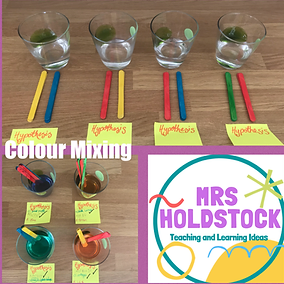
Colour Mixing
Play Video
Play Video
00:50
Art Telescope
Make an art telescope (it's just a piece of rolled up paper!) and guide children around a painting on the interactive whiteboard. Maybe ask them to search for clues or take them on a tour of the painting - the telescope isolates parts of the picture to encourage children to see things they would not have seen at first glance!
Load More
bottom of page